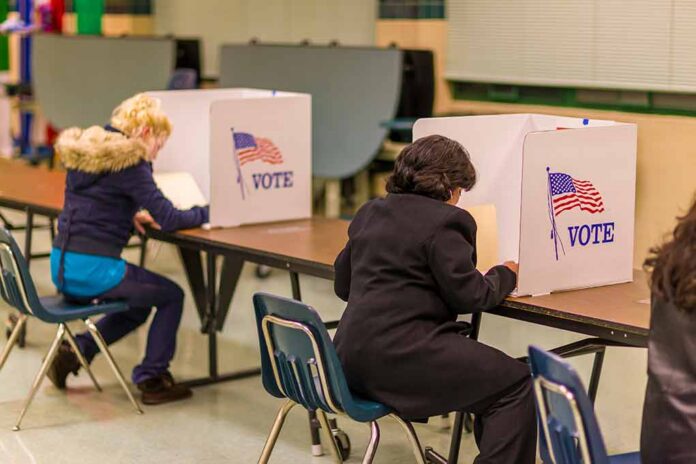
A massive pile of fake voter sign-up forms in Muskegon exposed both real fraud on the ground and deep confusion and mistrust in the system meant to stop it.
Story Snapshot
- Thousands of clearly fake voter registration applications were turned in to the Muskegon clerk in 2020.
- Local and state officials caught the bad forms before anyone voted, then handed the case to the Federal Bureau of Investigation (FBI).
- FBI agents later closed the case in 2025, saying they found no crime to charge, fueling anger from people who saw clear wrongdoing.
- The fight over this case shows how both sides now doubt federal justice and feel “the system” protects insiders, not regular voters.
What Actually Happened in Muskegon in 2020
In the fall of 2020, Muskegon City Clerk Ann Meisch’s office started receiving stacks of voter registration forms that looked wrong. Names did not match addresses, signatures looked forged, and many forms were incomplete or clearly fake. By mid‑October, Meisch estimated the group working in the city had delivered between 8,000 and 10,000 registration forms to her office. State summaries later described many of these applications as “clearly fraudulent,” meaning officials agreed something dishonest was happening.
City staff flagged the suspicious forms and stopped them from being added to the official voter list. Meisch reported the problem to local police and the Michigan Bureau of Elections as required by state law. The Muskegon Police Department and Michigan State Police opened a case focusing on GBI Strategies, a private voter‑registration firm working for Democratic campaigns. This early stage of the investigation confirmed the forms were bad but also found they had been caught in time, before any ballots were sent out.
How State Officials and the FBI Handled the Case
Once Michigan authorities saw that GBI Strategies operated in several states, the Attorney General’s office decided the case should go to the FBI, which handles national investigations. State officials closed their own criminal probe after referring it, saying they expected the federal government to dig deeper. According to later reporting and FBI documents cited by elected officials, canvassers working for the firm admitted in interviews that they signed forms in other people’s names, made up voters who did not exist, and received gift cards based on how many applications they turned in.
Despite those admissions, the FBI Detroit, Grand Rapids Resident Agency ended the investigation on September 25, 2025. The closure memo said “logical investigative leads had been exhausted,” that the work done “had not identified a criminal violation,” and that no further investigation was warranted. A federal prosecutor agreed with ending the case. Importantly, this final decision happened during Donald Trump’s second term, not under a Democratic president, which undercuts claims that Joe Biden’s team personally “buried” it.
Did Any Fraud Change Votes or Election Results?
The key question for most Americans is simple: did fake registrations lead to fake votes? On that point, every official source so far agrees they did not. Michigan State Police spokesperson Patrick Agema said “fraudulent voter registration forms had been created, but no fraudulent voter registrations were processed, and no ballots were cast.” The Muskegon clerk’s office also stated there was no evidence that any of the invalid applications led to someone getting registered, receiving a ballot, or voting.
Fact‑checking groups that reviewed police reports and state records reached the same conclusion. They found that while some applications were clearly bogus, they were removed before they could be used to get ballots or change the outcome of any race. Investigators further said the scheme appeared to be low‑level canvassers padding their numbers to earn pay and rewards from their employer, not an organized plan to flip Michigan’s results. That official story angers many people, but it matches what was found in audits and court challenges after 2020: proven fraud was rare and did not alter statewide outcomes.
Why This Case Still Fuels Distrust and Anger
Even though votes were not changed, the Muskegon case hits a nerve that both conservatives and liberals share: the belief that powerful insiders break rules and walk away free. Many conservative outlets argue the case shows “systemic voter fraud” tied to Democrats, and they accuse Michigan’s Attorney General and the FBI of slow‑walking and then shutting down a serious matter. Michigan’s Attorney General Dana Nessel, in contrast, calls the case “a perfect example of the system working,” because the clerk spotted the problem and no votes were affected.
This clash plays out against a wider backdrop where big claims of “massive fraud” keep surfacing, are investigated, and almost never lead to proven changes in election outcomes. Research across 13 federal election cycles from 2000 to 2024 found only 705 confirmed fraudulent ballots nationwide, about one per 2.1 million cast. That pattern makes many people on both sides feel whiplash: they see real wrongdoing, like fake forms and self‑serving canvassers, yet watch federal officials say it does not rise to a crime that can be charged.
What Muskegon Reveals About a Failing Trust in Government
For older conservatives, Muskegon looks like another case where a Democrat‑linked group appears to cheat and the justice system shrugs. For older liberals, it can look like a warning sign that private campaign firms cut corners, and that federal agencies may not fully explain why they decline cases. Both sides see federal decision‑makers insulated from real‑world frustration, speaking in legal language while ordinary citizens worry the American Dream depends on rules applying to everyone equally.
State and local workers in Muskegon did what the law asked: they caught fraud, reported it, and kept fake voters off the rolls. Yet the lack of charges, the layers of referrals, and the closed FBI file without public detail feed a broader sense that Washington protects its own. Until full FBI files, internal memos, and company records are released, many Americans will continue to suspect that what happened in Muskegon is less a closed case and more a symbol of a deeper problem in how the government polices itself.
Sources:
thegatewaypundit.com, wlns.com, bridgemi.com, thefederalist.com, thebrunswicknews.com, theepochtimes.com, youtube.com