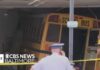
On one of Seattle’s busiest summer nights, a food festival near the Space Needle turned into a crime scene, leaving families asking how something this deadly could still happen in a place that was supposed to be safe.
Story Snapshot
- Two people were killed and five wounded, including a toddler, in a shooting at the Bite of Seattle food festival near the Space Needle.
- Seattle Police and firefighters rushed in after 6 p.m., locked down Seattle Center, and urged the public to avoid the area.
- Thousands of festival-goers ran for safety as witnesses reported rapid gunfire and a chaotic evacuation across several city blocks.
- Key facts like suspect identity and motive remain unclear, feeding public worry about crowd safety and trust in government protection.
Shooting Turns Festival Crowd Into Victims
On Sunday evening, gunfire broke out at Seattle Center during the Bite of Seattle food festival, close to the base of the Space Needle. A city fire spokesperson later said two people had been killed and five others wounded, turning a packed summer event into a deadly scene. Local reports say a two-year-old child was among the injured, and at least one adult woman was in critical condition after the attack. The event drew tens of thousands of people, magnifying the fear and confusion.
Seattle Police said on social media that officers were “investigating a shooting” with “multiple shooting victims” and warned people to avoid Seattle Center. Reporters on the ground described a heavy response by police and emergency crews arriving shortly after 6 p.m. around streets near the Space Needle, as the area was quickly sealed off. Officials shut down parts of the complex, including the Seattle Monorail, for the rest of the night to keep people away and preserve the crime scene.
Witnesses Describe Panic, Rapid Gunfire, and Evacuation
Festival attendees told local television crews they heard a series of loud pops, followed by what sounded like rapid gunfire as crowds packed into food vendor areas near the International Children’s Fountain. Some witnesses estimated seven to eight shots and described people dropping food and chairs as they ran, screaming and ducking behind booths. Reporters later showed a crime scene stretching across several city blocks from the Museum of Pop Culture to within about a hundred yards of the Space Needle.
Workers and guests at Bite of Seattle said security staff and police shouted for people to leave, helping funnel crowds out of the center and onto nearby streets and sidewalks. The evacuation came as families with children, older residents, and tourists tried to figure out which way was safe. This pattern matches what many Americans now know too well: a normal public event suddenly becomes a mass casualty scene, with little warning and no clear guidance about the threat in the first minutes.
Unanswered Questions and Growing Public Frustration
Authorities have confirmed the basic facts of the shooting but have not yet released a suspect identity, arrest details, or a clear motive. Early reports focused on victim counts and the size of the emergency response, while leaving out who opened fire and why. This silence may reflect normal investigative caution, but for many people it feels like another example of leaders failing to give straight answers when lives are at stake.
🚨 BREAKING LATEST UPDATE: 2 dead, 5 injured in Seattle Center shooting at Bite of Seattle festival
🇺🇸🔴 A shooting at the Bite of Seattle festival at Seattle Center near the Space Needle, Washington left two people dead and five others injured.
The shooting occurred around 6… https://t.co/VGRr1HPsB6
— War Updates FC (@k_c_shivansh) July 27, 2026
For both conservatives and liberals, this incident feeds a shared worry that crowded public spaces are less safe, even when government claims to plan for security at major events. People see social media videos of gunfire and panic before they hear any full timeline from police or city hall, which makes it easy to doubt whether officials are truly in control. When basic details about suspects, safeguards, or past warnings are slow to come out, many citizens see it as part of a deeper pattern of a system that reacts, but rarely seems to prevent.
Breaking-News Gaps and the Battle Over Trust
This shooting also shows how breaking news now unfolds in the United States: the first public record is a short police post online, then local outlets race to share witness clips, and only later do more concrete numbers and timelines appear. Research on crisis coverage has found that these early hours are often full of errors and gaps, yet they shape how people remember the event and whom they blame for it.
At Seattle Center, that gap meant families saw headlines about “multiple victims” near an iconic landmark, but got almost no detail about what protections had been in place, or whether anyone was caught. For many Americans across the political spectrum, it adds to a sense that the federal and local governments talk about safety yet leave ordinary people to fend for themselves in the moments that matter. In a time when trust in “elites” and institutions is already thin, each unclear event like this deepens the feeling that the system is not built for them.
Sources:
youtube.com, cbsnews.com, latimes.com, washingtonexaminer.com, economictimes.indiatimes.com, wbaltv.com, wftv.com, apnews.com