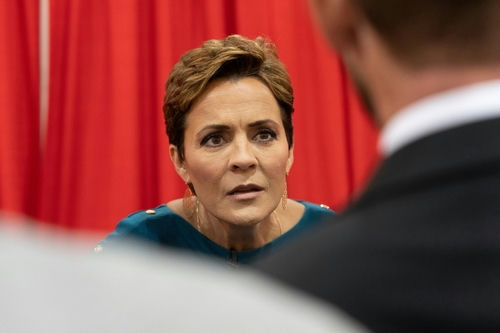
Kari Lake’s nomination to represent the United States in Jamaica reads less like a routine diplomatic appointment and more like a pressure-release valve for a controversy that refused to stay contained in Washington.
A nomination that doubles as a personnel decision
The White House announced on May 11, 2026 that Trump selected Kari Lake as his nominee for U.S. Ambassador to Jamaica, sending the pick to the Senate for hearings and a confirmation vote. On paper, it fills a long-vacant job in Kingston. In practice, it also moves a high-profile political fighter away from the U.S. Agency for Global Media, where her leadership drew intense attention and sharp criticism.
Lake embraced the nomination publicly, describing Jamaica as a country she knows well and promising, if confirmed, to strengthen bilateral partnership and advance U.S. interests. The White House press secretary praised her and signaled a desire for swift confirmation. Those upbeat lines set the stage, but the real drama sits in the unanswered question senators will probe: what, exactly, qualifies a modern political celebrity to run a strategically important Caribbean embassy?
Why the Jamaica post matters more than it looks
Americans hear “Jamaica” and think beaches; diplomats think security cooperation, migration pressures, narcotics interdiction, and regional influence. The U.S. Embassy in Kingston also supports American citizens, manages visas, and coordinates aid and law-enforcement collaboration. The job has been vacant since Nick Perry’s term ended in January 2025, leaving Scott Renner—an experienced career official who has served since 1997—to keep the machine running without the political weight a confirmed ambassador carries.
Kari Lake’s career pivot: newsroom to campaign trail to appointment
Lake built her public brand as a television news anchor in Phoenix, then made a rapid, polarizing jump into Republican politics. She lost the 2022 Arizona governor’s race to Katie Hobbs and later lost a 2024 Senate bid, outcomes that matter because ambassadors must still earn credibility even when they don’t win elections. Trump then brought Lake into his administration at the U.S. Agency for Global Media, handing her an institution with global reach and political sensitivity.
Voice of America fallout follows her to the Senate hearing room
Reports that Lake dismantled Voice of America during her USAGM tenure now form the unavoidable backdrop to her diplomatic nomination. Senate confirmation doesn’t function as therapy; it functions as accountability. Senators will likely ask how she handled budgets, staff, and mission clarity—because an ambassador’s work is management as much as meetings. Conservatives should welcome that scrutiny. Taxpayer-funded institutions demand competent stewardship, not chaos, whether the building is in Washington or Kingston.
The Senate math turns a personnel story into a power test
Republicans hold a small majority, and the reporting suggests not every GOP senator aligns with Lake’s particular brand of MAGA politics. That matters because ambassador confirmations can become proxy battles: loyalty versus qualifications, headlines versus governing, cable-news instincts versus diplomatic restraint. Democrats have ample incentive to press hard on her record at USAGM and her rhetoric from past campaigns. A narrow majority gives a handful of Republicans real leverage to demand answers, concessions, or changes.
What confirmation would require: competence, discipline, and a lower temperature
Ambassadors don’t get to “win the day.” They solve problems quietly, protect Americans abroad, and negotiate in a country that has its own priorities and pride. If Lake wants to succeed, she will need a disciplined message, respect for career professionals at State, and a clear grasp of Jamaica’s role in the Caribbean. The smartest conservative argument for her confirmation rests on results: safer borders through cooperation, stronger rule-of-law partnerships, and honest representation of U.S. interests without theatrics.
The two endings Washington is already preparing for
If the Senate confirms her, Trump places a loyal, media-savvy emissary in Kingston and resolves a leadership question at USAGM. If the Senate rejects her, the Jamaica post likely stays in acting hands longer, and Lake’s political brand takes another hit after two election losses. Either way, the nomination signals a larger trend: administrations increasingly treat certain diplomatic posts as political instruments. Voters should insist that the instrument still plays the right notes.
Jamaica deserves an ambassador who can be effective on day one, and the United States deserves a confirmation process that treats diplomacy as serious business, not just a landing spot for famous allies. Lake’s hearing, whenever scheduled, will reveal whether she can translate campaign combat into statecraft. That conversion—fighter to representative—is rare. When it works, it strengthens America. When it fails, it leaves a vacancy that no press release can fill.
Sources:
https://www.fox10phoenix.com/news/kari-lake-appointed-trump-jamaica-ambassadorship
https://www.phoenixnewtimes.com/news/arizona-kari-lake-nominated-ambassador-jamaica-40666398/
https://www.kjzz.org/politics/2026-05-11/kari-lake-nominated-as-ambassador-to-jamaica
https://www.axios.com/local/phoenix/2026/05/11/trump-nominates-kari-lake-jamaica-ambassador
https://www.politico.com/news/2026/05/11/kari-lake-doug-mastriano-diplomats-00915314