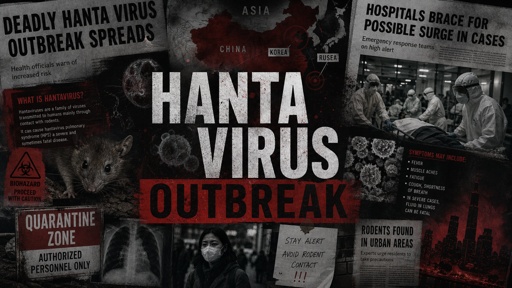
The most unsettling thing about the current hantavirus scare is not the death toll—it is the fact that 41 Americans are waiting out a 42-day question mark with zero confirmed answers so far.
From Exotic Cruise To 42 Days Of “What If?”
One moment, passengers on the expedition ship MV Hondius are photographing glaciers in the Andes; the next, some of them are in intensive care, and three have died. Health officials traced the illnesses to Andes virus, a form of hantavirus carried by rodents in Chile and Argentina. That detective work led straight to the United States, where 41 people with possible exposure—on the ship or on later flights—now sit through a 42-day monitoring period, waiting to see if an invisible coin flip lands on heads or tails.
Those 41 people are scattered between specialized hospitals in Omaha, Atlanta, and Kansas City and their own living rooms. None has tested positive. No one is gasping for air in a U.S. ICU because of this cluster. Yet every cough, every random fever over the coming weeks will trigger a phone call, a test, and a jolt of anxiety. That is the new reality of global travel: you can bring back photos, souvenirs, and, once in a great while, a question that medicine cannot answer immediately.
What Andes Hantavirus Actually Does To The Body
Andes virus is not the garden-variety respiratory bug that clears in a weekend. This virus can tear through the lungs and cardiovascular system. Patients often start with vague, flu-like illness—fever, aches, fatigue—before some tip into a terrifying second phase: shortness of breath, collapsing blood pressure, and need for intensive respiratory support. Case-fatality rates in South American outbreaks have been high, making this pathogen a classic “low probability, high consequence” threat that serious public-health systems cannot ignore, even when case numbers stay tiny.
Unlike the Sin Nombre hantavirus that caused the 1993 Four Corners outbreak in the American Southwest, Andes virus has shown it can occasionally jump from person to person. That jump usually requires sustained, close contact with a very sick individual—spouses, household members, or healthcare workers caring for patients in late-stage disease. That is the detail that made this cruise-ship cluster more than a historical footnote: a semi-closed environment, shared cabins, and later cramped airplane seating turned a rodent virus into a test of whether our post-COVID infrastructure can calmly handle high-stakes ambiguity.
Why U.S. Officials Sound Calm While Acting Cautious
CDC’s messaging threads a needle many Americans now recognize: no confirmed U.S. cases, very low risk to the general public, but no room for complacency. Since 1993, the United States has recorded fewer than a thousand hantavirus disease cases in total, nearly all from direct rodent exposure, not travel or human spread. That track record, plus what we know about Andes virus needing intense close contact, supports CDC’s “extremely unlikely” warning about broad spread. The agency is cautious without indulging in theatrical panic.
From a common-sense conservative perspective, the response lands in a reasonable middle lane. Authorities are not shutting schools, wrecking small businesses, or mandating new restrictions on daily life. Instead, they are focusing on the actual risk group: the 41 potentially exposed people and the clinicians who might see them. That targeted approach respects both public safety and personal liberty, while acknowledging an uncomfortable truth—freedom to roam the world also means accepting rare, serious risks that cannot be regulated down to zero.
How We Got From Deer Mice To A Deadly Cruise
Hantaviruses have been quietly circulating in rodents for generations. In the United States, surveillance began in earnest after the Four Corners outbreak in 1993, when previously healthy adults suddenly died of what came to be called hantavirus pulmonary syndrome. Since then, about 890 laboratory-confirmed hantavirus disease cases have been reported nationwide, with most exposures west of the Mississippi River and many linked to dusty sheds, cabins, and barns rather than glamorous expeditions. The risk was rural, local, and largely invisible to most urban Americans.
Globalization changed that epidemiologic map. Expedition cruising to the Southern Cone surged, bringing affluent travelers into regions where Andes virus is endemic. Mix rodent-friendly environments, cramped ship quarters, and onward international flights, and you have a recipe for exactly the kind of multi-country cluster now under investigation. Yet the numbers matter: the World Health Organization has reported only eight cases in this specific event—six confirmed, two suspected—across multiple nations. Three deaths in a world of eight billion people do not justify hysteria, but they do demand competent, transparent containment.
What This Means For Travelers, Hospitals, And The Rest Of Us
Travelers who venture to remote parts of South America should treat hantavirus the way pilots treat thunderstorms: rare, but non-negotiable. Avoid rodent-infested spaces, demand basic cleanliness in lodging, and remember that “rustic charm” can sometimes include viral passengers. Hospitals in Omaha, Atlanta, and Kansas City are now proving that the country has the biocontainment capability to monitor high-risk individuals without disrupting routine care for everyone else—evidence that investments in preparedness, however dull they sounded at budget time, still matter.
No known cases of hantavirus in U.S. as officials monitor 41 with possible exposure https://t.co/kk7x4TEXVF
— NBC News Health (@NBCNewsHealth) May 15, 2026
For the average American, the practical lesson is sharper than the headline suggests. The nation lives in a world where rare, lethal pathogens will occasionally hitch rides home on airplanes and cruise ships. The test is not whether we can avoid every exposure; it is whether we can respond proportionately—tracking real contacts, resisting clickbait panic, and demanding that public health agencies stay grounded in data, not politics. For now, the scoreboard reads: eight global cases, three deaths, zero in the United States. The smart play is to keep it that way without losing our minds or our freedoms.
Sources:
Hantavirus outbreak: CDC says no cases confirmed in US
Hantavirus: What you need to know – Stanford Medicine
Reported Cases of Hantavirus Disease – CDC
Twenty-Year Summary of Surveillance for Human Hantavirus Infection, United States
Cases of Hantavirus by State (2026 Updates) | Box-Kat
2026 Multi-country Hantavirus Cluster Linked to Cruise Ship – CDC HAN #00528
Hantavirus – World Health Organization Fact Sheet