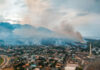
A packed Bangkok beer hall turned into a deadly trap in minutes, killing at least 27 people and exposing once again how weak safety rules and enforcement can be when ordinary lives are on the line.
Story Snapshot
- At least 27 people died and dozens were injured when a fire ripped through the Na Ladprao beer hall in Bangkok.
- Witnesses describe smoke near a circuit breaker, a sudden explosion, and thick smoke that quickly filled the venue.
- Many victims were found trapped in restrooms at the back of the pub, raising hard questions about exits and safety design.
- The cause is still under investigation, part of a wider pattern of deadly entertainment venue fires linked to poor safety enforcement in Thailand.
Deadly blaze turns a popular beer hall into a death trap
Thai officials say a huge fire engulfed the Na Ladprao beer hall in Bangkok around midnight, killing at least 27 people and injuring dozens more. Video and photos from the scene show flames bursting from the single-story building as thick black smoke pours into the sky while people run for their lives. Rescuers reported that the fire was fast-moving, and firefighters took roughly half an hour to bring it under control once they arrived. Inside, tables, chairs, and interior walls were left charred and destroyed.
Witness accounts help explain how quickly the situation turned deadly. Thailand’s prime minister said a musician performing that night reported seeing smoke near a circuit breaker by the stage before the power went out. The musician then heard an explosion, and thick smoke rushed through the hall, sending panicked customers scrambling for exits. Online clips from first responders capture chaotic scenes outside the pub, with people yelling that there was a fire and urging others to move back as the blaze grew.
Victims trapped in restrooms as smoke and confusion spread
Rescue workers later found many of the bodies in restrooms at the back of the beer hall, suggesting that some customers fled there to escape the flames or smoke but could not get out again. Local reports say at least 63 people were hospitalized after the fire, many suffering from smoke inhalation. One survivor described heavy smoke, blocked views, and a crush of people trying to find any way out. Another witness on video mourned a missing sister, showing how personal and sudden the losses were for families caught in the disaster.
Authorities say the building’s street-facing windows were blown out, and debris including burned speakers, televisions, and melted musical instruments littered the sidewalk. These details point to intense heat and possible pressure changes inside the hall as the fire spread. Bangkok’s governor has ordered investigators to focus on how exits were marked, positioned, and maintained, and on whether ceiling materials and soundproofing helped feed the fire or trap smoke. Forensic police have cordoned off the site to examine the origin of the blaze and the exact path it took through the structure.
Unanswered questions and a long pattern of safety failures
Officials have not yet confirmed the final cause of the fire, and early reports differ on the spark. One account cites the musician’s report of smoke around an electrical circuit breaker. Other coverage has mentioned outdoor fireworks or faulty wiring as possible factors, but investigators say the cause remains undetermined until forensic work is complete. Social media posts from authorities stress that teams are studying emergency exits and building materials, but they have not given a clear timeline for when the public will get full answers.
A huge fire engulfed a beer hall in Bangkok overnight into Monday, killing at least 27 people and injuring dozens before firefighters brought the blaze under control, authorities said. https://t.co/dSmbuOW2Bi
— CBS News (@CBSNews) July 13, 2026
This tragedy does not stand alone; it fits a harsh pattern. In 2009, the Santika nightclub fire in Bangkok killed 67 people, and in 2022, the Mountain B nightclub fire killed 15. In those earlier cases, investigators pointed to blocked or hard-to-find exits and flammable interior decorations as key reasons so many people died. A recent review of Thai entertainment venues noted that interior fireproofing rules were weak or poorly enforced, leaving club and bar owners free to cut corners on safety to save money.
For many Americans watching from afar, this story touches familiar nerves. People on the right and left are tired of feeling that rules protect businesses and elites more than ordinary families. When a crowded beer hall can turn into a mass-casualty event in minutes, it looks less like a freak accident and more like the result of years of lax enforcement, cozy ties between regulators and owners, and a system that treats safety as an afterthought. The pattern in Thailand echoes broader worries that when governments avoid tough oversight, regular people pay the price.
Sources:
youtube.com, mixmag.net, nytimes.com, bbc.com, npr.org, apnews.com, wral.com