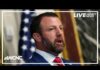
A Democrat who nearly ran Florida is now facing meth and marijuana charges after a late-night traffic stop in Alabama, raising fresh questions about media judgment and political hypocrisy.
Story Snapshot
- Police say they found meth, marijuana, and a glass pipe in Andrew Gillum’s car after erratic driving.
- Gillum, who lost to Governor Ron DeSantis by a narrow margin in 2018, now faces felony and misdemeanor drug charges.
- Many national outlets once portrayed Gillum as a rising Democratic figure before later covering his legal troubles.
- The case is still pending, yet coverage shows how quickly narratives form when a high-profile figure is involved.
From Near Governor to Drug Charges in Daphne, Alabama
Former Tallahassee mayor Andrew Gillum, once the Democratic nominee for Florida governor, was arrested in Daphne, Alabama, after police say they found methamphetamine and marijuana in his car. The stop happened late at night on U.S. 98 near North Main Street after officers reported his vehicle was driving erratically. Police say they saw a glass pipe on the center console, which they say gave them probable cause to search the car. That search turned up three packages that tested positive for methamphetamine and several rolled marijuana cigarettes, according to the Daphne Police Department. Local reports note Gillum was charged with unlawful possession of a controlled substance and second-degree possession of marijuana, along with related paraphernalia offenses.
Records cited by local media show Gillum was booked into the Daphne City Jail before being transferred to the Baldwin County correctional facility, then released the next day. Law enforcement listed the charges as possession of dangerous drugs, possession of marijuana, and drug paraphernalia. These charges are serious; unlawful possession of a controlled substance in Alabama is classified as a felony, while second-degree marijuana possession is a misdemeanor that can still carry jail time and fines. Gillum has not yet been found guilty in court, and under American law he remains innocent until proven otherwise. Still, for someone who nearly ran the state of Florida, the public fallout is already significant.
What Police Say They Found – And What We Still Do Not Know
Police statements and local coverage focus on the physical evidence: the glass pipe, the three packages of suspected methamphetamine, and the rolled marijuana cigarettes recovered from Gillum’s vehicle. Officers say a field test showed the substance was methamphetamine, which led to the felony drug possession charge. However, no certified forensic lab report has been released to the public yet, and there is no detailed chain-of-custody record in open sources. Without that lab work, public reporting currently relies largely on police statements. There is also no dashcam or body camera video available to confirm how the stop unfolded or to show the erratic driving officers reported. Those missing pieces matter for due process, but so far neither Gillum nor his lawyers have publicly pushed for independent testing or video release in the media coverage.
Gillum has not issued a public statement about the Alabama arrest, according to South Florida reporting. That means there is no direct denial, explanation, or claim of police misconduct on record. Court filings and discovery could later bring more detail, including sworn testimony from officers and lab reports on the seized substances. For now, the case sits in a familiar gray zone: serious allegations supported by initial police reports, but not yet tested in a courtroom. That gap is where media framing tends to rush in, shaping public opinion long before a jury hears the facts.
Media Narratives, Political Hypocrisy, and the DeSantis Contrast
The national press once promoted Andrew Gillum as a “Democratic rising star” who came within about 33,000 votes of beating Ron DeSantis in the 2018 governor race. Outlets and pundits framed him as the future of progressive politics and cheered his promises of bigger government, climate regulations, and liberal social policies. Now, many of those same outlets are running quick-hit segments on his drug arrest, often pairing it with his past incident in Miami Beach, building a story of recurring personal trouble. One Florida station bluntly noted that he almost beat DeSantis and complained that some conservative commentators argue have not admitted how wrong they were. For conservative readers, this looks like a familiar pattern: liberal media hype a candidate who fits their agenda, then quietly move on when the story turns ugly.
The 2018 Florida governor’s race will go down as one of the great sliding-doors moments in American politics. Ron DeSantis, after “begging” for Donald Trump’s endorsement, eked out a 0.4 percent win over the Democratic mayor of Tallahassee, Andrew Gillum. In the years since,… pic.twitter.com/cWPqPBC7oI
— The Spectator 🇺🇸 (@TheSpectator) July 7, 2026
This latest arrest also highlights a sharp contrast in leadership decisions. In 2018, Florida voters chose Ron DeSantis over Gillum, a choice that shaped national politics and helped stop a far-left agenda in a key state. If Gillum had won, Florida could have faced the same high-tax, soft-on-crime, and “woke” priorities seen in other blue states. Instead, DeSantis pushed back on radical school agendas, stood strong on border and crime issues, and kept Florida’s economy competitive, even as national Democrats drove inflation and energy costs higher. Gillum’s legal problems now raise hard questions about judgment—not just his, but also the judgment of media and party leaders who tried to sell him as a trustworthy governor while attacking DeSantis.
Due Process Still Matters, Even When Media Rush the Story
This Alabama case fits a broader pattern. When a high-profile political figure is arrested, national outlets often blast the headline first and sort out the details later. A study in political communication found that most coverage of drug charges against public officials leads with the accusation, and only a small share note the presumption of innocence or missing lab verification in early stories. Gillum’s situation shows that pattern again. Stories stress “meth and marijuana found” and “back in jail,” while facts about pending trial, missing lab reports, and lack of video evidence get less attention. Even for a Democrat once boosted by the press, that rush to judgment is dangerous. For conservatives, it is a reminder to insist on full evidence, real accountability, and equal standards—rather than taking corporate media framing at face value.
Sources:
redstate.com, youtube.com, mynbc15.com, ca.news.yahoo.com, facebook.com, instagram.com