A high‑stakes Washington meeting between Secretary of State Marco Rubio and Pakistan’s foreign minister is unfolding as Islamabad quietly positions itself between America and Iran while both sides publicly talk only about “bilateral relations” and “regional stability.”
Story Snapshot
- Rubio and Pakistani Deputy Prime Minister and Foreign Minister Ishaq Dar met at the State Department in Washington, confirming an active high‑level channel between the two countries.[2][4][7]
- Pakistan’s own Foreign Office says the talks focused on bilateral ties and “regional peace and stability,” leaving big questions about what was really discussed behind closed doors.[7]
- Television coverage and analysts frame Pakistan as trying to mediate between the United States and Iran, but no official text yet proves a formal mediation role.[1][7]
- The Rubio–Dar track sits alongside separate Rubio talks with Pakistan’s prime minister, underscoring an intense diplomatic courtship with a nuclear‑armed but unreliable partner.[6]
Rubio–Dar Meeting Confirms Deepening U.S.–Pakistan Diplomatic Track
Secretary of State Marco Rubio’s face‑to‑face meeting with Pakistan’s Deputy Prime Minister and Foreign Minister Ishaq Dar at the Department of State confirms that Washington is investing real political capital in high‑level dialogue with Islamabad.[2][4][7] The Pentagon‑linked webcast and State Department video log show Rubio greeting Dar at the State Department on July 25, 2025, in an official setting, underscoring that this is not a casual pull‑aside but a scheduled, formal diplomatic engagement.[2][4] Pakistan’s own Foreign Office later reinforced that framing, describing a structured conversation rather than a symbolic photo‑op.[7]
Pakistan’s Ministry of Foreign Affairs stated that Dar “met with the U.S. Secretary of State, Marco Rubio, on 25 July 2025, in Washington D.C.” and that the two sides discussed “the broad contours of Pakistan-U.S. bilateral relations.”[7] The statement emphasized “close cooperation” and “regional peace and stability,” language that signals Washington still sees Pakistan as a necessary, if difficult, partner in a volatile neighborhood.[7] For conservative Americans, this confirms that even under a tougher Trump–Rubio foreign policy, the bureaucracy continues to cultivate complex ties with a country that has a long history of playing both sides.
Official Readouts Stay Vague While Media Push Iran Mediation Narrative
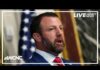
The Pakistani Foreign Office readout leans heavily on generic diplomatic language, stressing a “long-term partnership” and cooperation on “bilateral, regional, and global issues of mutual concern,” without naming concrete deliverables or specific concessions.[7] That vagueness contrasts sharply with broadcast coverage that tells viewers Pakistan is trying to mediate a peace deal between the United States and Iran, framing Islamabad as a go‑between in the current conflict.[1] A LiveNOW transcript notes that Pakistan’s foreign ministry confirmed Dar’s Washington visit to Reuters and other outlets, then quickly pivots to claims about mediation, which come from analysts rather than official documents.[1]
The key gap for readers who value transparency and constitutional oversight is that there is still no public joint statement or signed text assigning Pakistan an official mediation role between Washington and Tehran.[1][7] Analysts and talk‑show panels describe Pakistan as an intermediary, but the documentary record so far consists of short, cautious readouts about “regional peace” that could cover everything from shipping lanes to counterterrorism.[1][7] That mismatch raises a serious question: are unelected diplomatic and media elites inflating Pakistan’s role to steer public opinion, while the formal record keeps ordinary Americans in the dark about what is promised in their name?
Multiple Rubio–Pakistan Meetings Complicate Public Accountability
The meeting with Ishaq Dar is not a one‑off. The State Department separately records that Secretary Rubio met Pakistan’s Prime Minister Shehbaz Sharif in Washington, signaling a broader campaign of outreach to Pakistan’s civilian leadership.[6] That second engagement means there are at least two major Rubio–Pakistan tracks running in Washington: one with the foreign minister, and another with the prime minister.[6][7] When television coverage and social media posts refer vaguely to “Rubio meeting Pakistan’s leadership,” these parallel tracks can easily be blurred, making it harder for citizens and Congress to pin down which promises were made to whom.
🇺🇸🇵🇰⚡️– US Secretary of State, Marco Rubio meets with the foreign minister of Pakistan, Ishaq Dar. pic.twitter.com/NwKp60nGw3
— MonitorX (@MonitorX99800) May 29, 2026
Conservatives who remember years of mixed messages on Pakistan—from cooperation against terror groups one day to double‑dealing with radicals the next—have reason to demand clarity.[5] If multiple meetings are being used to pressure Pakistan on Iran, on regional energy routes, or on security access, those are significant strategic choices that deserve open debate. Instead, Americans get thirty‑second video clips, tight‑lipped readouts, and a swirl of commentary about mediation and regional power politics, while the concrete terms of any understanding remain tucked away in diplomatic cables and classified memos.
Strategic Stakes: Tactical Partner, Long Memory
Rubio has recently drawn a distinction between India as a “strategic” partner and Pakistan as more “tactical,” explaining that Washington’s deep, long‑term alignment is with New Delhi while engagement with Islamabad is narrower and conditional.[5] He also said that Pakistan’s alleged role as mediator in Iran–United States tensions “never came up” in his talks with India’s foreign minister, suggesting that Washington is careful not to undercut its main democratic ally in the region.[5] For readers who put national security, strong alliances, and American leverage first, that hierarchy matters: the United States cannot afford to treat India and Pakistan as interchangeable players.
At the same time, Pakistan is a nuclear‑armed state sitting at the crossroads of Iran, China, and Afghanistan, and past administrations used that geography as an excuse to tolerate duplicity.[5][7] The Trump–Rubio team faces a familiar temptation: lean on Pakistan for short‑term tactical gains, whether on Iran de‑escalation or regional logistics, while hoping long‑term strategic costs can be managed later. The record around the Rubio–Dar and Rubio–Sharif meetings shows real engagement but very few specifics in public.[6][7] That is precisely where vigilant citizens, constitutional conservatives, and a skeptical Congress must insist that any deal—on Iran, on security, or on aid—be transparent, limited, and firmly rooted in America’s interests, not in the preferences of the foreign policy establishment.
Sources:
[1] Web – WATCH LIVE: Secretary Rubio meets with the Pakistani foreign minister
[2] YouTube – Today: Pakistan’s FM meets with Rubio
[4] Web – Deputy Prime Minister/Foreign Minister Meets the U.S. Secretary of …
[5] YouTube – Secretary Rubio meets with Pakistani Deputy Prime Minister and …
[6] Web – Secretary Rubio’s Meeting with Pakistan Prime Minister Sharif
[7] YouTube – ‘India Crucial Partner,’ Rubio Says During High-Stakes India Visit