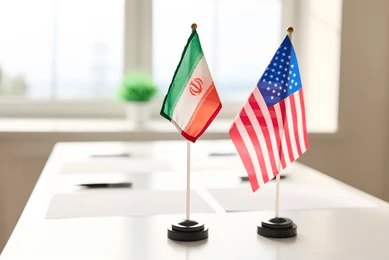
A supposed “logistical delay” in U.S.–Iran talks has turned into a fresh information war over who is really trying to kill Trump’s hard‑line peace deal.
Story Snapshot
- The White House says Vice President JD Vance’s Switzerland trip was postponed only because of logistics.
- Iranian and Hezbollah‑linked media claim Tehran paused talks to protest Israeli strikes in Lebanon.
- The delay comes just days after a memorandum to end the war and reopen the Strait of Hormuz was signed.[5]
- Competing stories over “what really happened” show how enemies exploit crisis moments to weaken U.S. leverage.[17]
What the White House Says Happened
According to the White House, this delay is about planes, schedules, and planning, not politics or pressure from Iran. Officials told reporters that Vice President JD Vance was “not departing tonight” for Switzerland and blamed “logistical issues,” saying these negotiations have never been “simple or predictable.” They stressed the American team was packed and “ready to depart at the first opportunity,” but final details for the technical talks had not been nailed down yet.[1] That message presents the Trump administration as steady, prepared, and not chasing Tehran.
Swiss officials backed up at least part of that picture. Switzerland, which was set to host the meeting at the Burgenstock resort, confirmed the talks had been postponed and said it remained ready to facilitate when both sides were prepared.[3] The Swiss statement did not blame Israeli strikes or any specific actor, which supports the idea that the immediate trigger, on paper, was procedural. The White House also emphasized that the planned session was a technical follow‑up, not a big political ceremony, so some scheduling risk was expected.[1]
How Iran and Regional Media Are Spinning the Delay
While the White House talks about logistics, Iranian and Hezbollah‑aligned outlets are selling a very different story. The semi‑official Tasnim agency said Iran’s negotiators “paused talks and the exchange of texts” because of “Israel’s intensified military actions in Lebanon.”[10] Al‑Mayadeen, a network close to Hezbollah, reported that Iran delayed sending its delegation to Switzerland specifically due to Israel’s ongoing operations in Lebanon.[9] That framing paints Tehran as standing up for Lebanon and shifts blame onto Israel, and by extension onto Washington for backing Israel.
Some Western outlets repeated that angle, noting the timing. One report said the White House logistics announcement came after Al‑Mayadeen’s claim that Iran was holding back its delegation over Israel’s campaign in Lebanon.[5] Iran‑linked media even said negotiators had stopped all contact with the United States and warned about blocking the Strait of Hormuz in response to the strikes.[9] For American readers, that means we are not just watching a delay. We are watching Iran and its media allies try to turn a scheduling change into a propaganda win against the United States and Israel at the same time.
The High‑Stakes Deal Hanging in the Balance
This fight over “what caused the delay” matters because of what is on the table. Just days earlier, U.S. and Iranian officials remotely signed a memorandum of understanding meant to end a three‑and‑a‑half‑month conflict that shut the Strait of Hormuz and wrecked global energy markets.[20] The fourteen‑point draft would stop military operations on all fronts, respect both countries’ borders, and start a sixty‑day clock for a final, tougher deal.[20] Iran would have to halt enrichment, dismantle nuclear sites, and give up highly enriched uranium, while the U.S. would lift sanctions and open the strait step by step.[20]
That kind of agreement is exactly what many conservatives have demanded for years: real limits on Iran’s nuclear program, an end to funding for terror proxies like Hamas and Hezbollah, and full access to the Strait without shakedowns.[17][20] But it is also fragile. Iran has already pushed to delay “final negotiations” until after it sees more U.S. steps, like unfreezing assets.[20] Any pause gives Tehran room to stall, test missiles, or pressure the West through oil markets again. That is why the White House is careful to project calm control, and why Iran’s media wants the world to see the talks as hostage to Israeli actions.
Why the Competing Stories Matter for U.S. Leverage
Moments like this are common in crisis diplomacy. When talks slip, governments often blame bland “logistics,” while rivals tie every delay to bombs and battlefield moves.[2] Scholars note that vague language is used on purpose, because even the public reason given for a delay can change who looks strong, who looks weak, and who takes the blame at home.[18] In this case, the Trump administration does not want to reward Tehran’s threats by admitting the process is at the mercy of rockets in Lebanon.
Regional media linked to Iran and Hezbollah, on the other hand, gain from saying Israel “killed” the talks. That story pressures Western leaders, fuels protests, and helps Tehran dodge criticism for dragging its feet on nuclear concessions.[9][18] For conservative Americans, the risk is clear: if Iran’s narrative dominates, pressure will build on Washington to soften demands, ease sanctions faster, or lean on Israel to pull back, all without getting firm, verifiable limits on Iran’s nuclear work. That is why it matters to track the facts, not just the spin, as this delay plays out.
Sources:
[1] Web – US-Iran Talks Postponed Amid Israeli Strikes as White House Blames …
[2] Web – White House postpones Vance’s trip to Switzerland for Iran talks …
[3] YouTube – White House postpones Vance’s Iran talks trip to Switzerland
[5] YouTube – US-Iran Postpone Peace Talks In Geneva, Claim Different Reasons
[9] Web – Iran live updates: US talks with Iran postponed – ABC News
[10] Web – Israeli Military Strikes in Southern Lebanon in Intense Fighting as …
[17] Web – US-Iran talks postponed as Israel attacks Lebanon – Facebook
[18] Web – US military to block ships from Iranian ports after talks yield … – …
[20] YouTube – Iran War Negotiations: What’s on the Table?