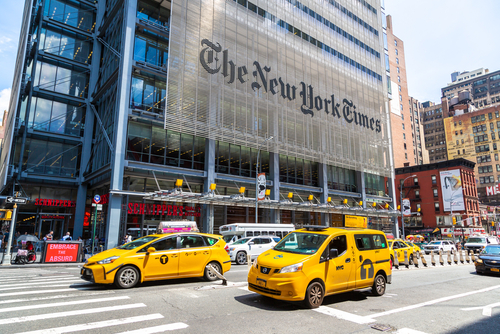
The federal civil rights agency created to fight bias against the powerless is now suing the country’s most famous liberal newspaper for allegedly discriminating against a white man—and the Times is firing back, accusing Trump’s government of weaponizing the law.
Story Snapshot
- The Equal Employment Opportunity Commission (EEOC) says the New York Times passed over a white male editor for a promotion to meet diversity goals.
- The New York Times denies using race or sex and has countersued, calling the case political retaliation by the Trump administration.
- The fight turns a single hiring decision into a test of diversity policies, free press protections, and trust in federal law enforcement.
- Both sides’ claims highlight a deeper worry shared by many Americans: powerful institutions are serving politics and elites, not fairness or merit.
How a Promotion Fight Became a Federal Civil Rights Case
The Equal Employment Opportunity Commission, the civil rights agency born from the 1964 Civil Rights Act, filed a lawsuit in May 2026 against the New York Times in federal court in New York. The case centers on a 2025 hiring decision for a deputy real estate editor job in the paper’s newsroom. A veteran editor, a white man with many years at the Times and real estate reporting experience, applied for the role but was denied a final interview and did not get the job. The EEOC says this was not just a bad break, but illegal discrimination based on race and sex.
The EEOC complaint says the Times advanced four finalists—a white woman, a Black man, an Asian woman, and a multiracial woman—and none of them were white men. The multiracial woman was hired. According to the complaint, she lacked real estate journalism experience, even though that was listed as a basic qualification in the job posting. Internal interview notes reportedly described her as “a bit green overall,” suggesting concerns about her readiness for the role. The agency claims this choice was driven by the Times’ own diversity goals, not by merit alone, and that those goals led to “race and sex conscious decision making” barred by federal law.
What the EEOC Says the New York Times Did Wrong
The EEOC points to the New York Times’ public diversity reports and internal diversity, equity, and inclusion policies as key evidence. These documents track progress in raising the share of women and people of color, especially in leadership jobs. The agency argues that managers used these goals when deciding who to interview and promote, and that the white male editor “did not match the race and/or sex characteristics” the Times wanted to increase in its leadership ranks. It also claims hiring managers broke standard procedures, pre-selecting the multiracial woman early and moving her forward even though panel ratings placed two other finalists ahead of her.
The lawsuit seeks strong remedies. The EEOC is asking the court to order the Times to stop using race or sex in hiring and promotions, and to pay back wages, damages for emotional harm, and possibly punitive damages. The agency also wants either a promotion for the editor or front pay—money meant to cover future lost earnings if he does not get the job. For the EEOC, this case is framed as part of a broader push against what it sees as illegal, quota-style diversity practices dressed up as inclusion. Under Trump’s appointee leading the agency, “systemic” cases like this—where policies allegedly shape decisions across a company—have been put in the spotlight.
How the New York Times and Its Allies Are Fighting Back
The New York Times flatly denies any wrongdoing and says it hired the “most qualified candidate” based on skill, not identity. A company spokesperson called the EEOC’s allegations “politically motivated,” tying them directly to the Trump administration’s long-running attacks on the paper. In a countersuit, the Times argues that the EEOC spent eight months investigating the complaint and “found no evidence that race or sex was considered” in the hiring decision. Yet, the agency still chose to sue, which the paper says shows a “retaliatory, bad-faith use of authority.”
The countersuit also claims the EEOC left out important facts from its narrative. Times lawyers say the editor had been offered two other jobs in 2024 that fit his career goals but chose not to take them. They argue that the chosen deputy editor had strong experience in “service journalism”—practical, how-to style coverage—which the job posting stressed as a major part of the role. The Times insists its diversity goals are “aspirational,” not hard quotas, and says the leadership goals in a 2021 “Call to Action” report did not govern this particular deputy editor job. For the paper, the real danger is a government agency punishing a critical news outlet without solid proof.
Politics, DEI, and Why This Case Feels Rigged to Many Americans
This clash hits nerves on both left and right. Many conservatives see the case as long-overdue pushback against big media and corporate diversity policies that, in practice, treat white men as less worthy no matter their record. To them, the EEOC’s allegations read like confirmation that “woke” hiring now openly favors identity over experience. Many liberals, however, see something different: a Trump-run agency twisting civil rights law to attack a paper the president has called an “enemy,” turning a single promotion fight into a weapon against the free press.
New York Times Countersues Trump DOJ After EEOC Accuses Newspaper of Discriminating Against White Male Employee
Link in the comment section. pic.twitter.com/7qnUazgHPb
— The Gateway Pundit (@gatewaypundit) July 12, 2026
New York Times reporting itself shows that EEOC staff have felt pressure under Trump to bring “politically charged cases with little evidence,” especially against institutions seen as critics of his agenda. That deepens fears that law enforcement is being bent to serve the powerful instead of protecting ordinary workers. At the same time, the EEOC’s choice to sue a famous liberal employer over alleged bias against a white man underscores a growing fact: reverse discrimination claims are now part of the civil rights battlefield, especially where diversity, equity, and inclusion policies guide hiring. For millions of Americans stuck between elite media and politicized agencies, this fight looks less like justice and more like another round in a power struggle where they are not the priority.
Sources:
thegatewaypundit.com, hollywoodreporter.com, kten.com, nymag.com, nypost.com, facebook.com, x.com, nytimes.com, youtube.com, cnn.com, apnews.com, kcra.com, eeoc.gov