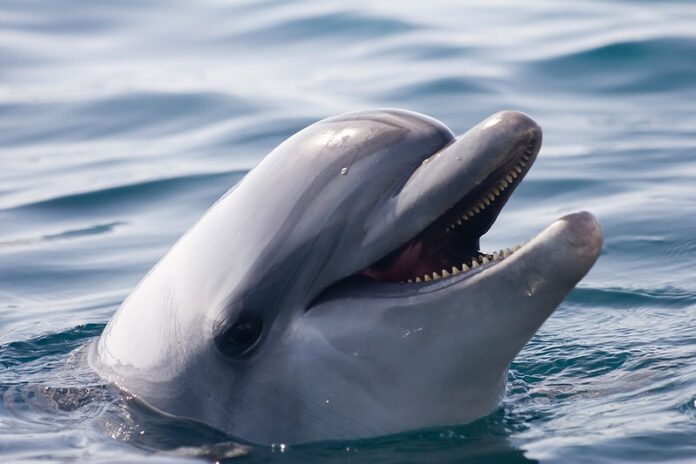
Iran is preparing to deploy dolphins armed with explosive mines in kamikaze attacks against US warships stationed in the Strait of Hormuz, as Tehran considers the weeks-long American military blockade an act of war that demands retaliation.
Weapons From Soviet-Era Training Program
The Islamic Republic purchased dolphins trained for combat operations from the Soviet navy in 2000, according to previous BBC reporting. These marine mammals received extensive instruction in attacking enemy forces using harpoons mounted on their backs and conducting suicide missions by carrying explosive mines directly to target vessels. Iranian officials confirmed to the Wall Street Journal that these dolphins remain part of Tehran’s unused weapons arsenal, ready for deployment if hardliners prevail in demanding military action against the United States.
Blockade Triggers Financial Crisis
The US military blockade has effectively halted Iranian oil exports through the Strait of Hormuz, creating severe economic damage that growing numbers of Iranian hardliners view as equivalent to military aggression. Despite an extended cease-fire between the two nations, pressure is mounting within Tehran’s government to respond with force. The Islamic Revolutionary Guard has already threatened to sever crucial underwater phone cables running through the strait, which could disrupt global internet communications and dramatically escalate tensions between Washington and Tehran.
Additional Military Options Under Consideration
Beyond the dolphin strikes, Iranian military planners are evaluating submarine deployments into the strategic waterway. Hamidreza Azizi, a Middle East specialist at the Berlin-based SWP research institute, told the Wall Street Journal that Iranian decision makers increasingly see the blockade not as an alternative to armed conflict but as war by another name. The financial devastation caused by blocked oil revenues may soon make renewed military confrontation appear less costly than enduring continued economic strangulation, according to Azizi’s assessment of Tehran’s strategic calculations.
What This Means
The Strait of Hormuz serves as one of the world’s most critical maritime chokepoints, with roughly one-fifth of global oil supplies passing through its narrow waters. Any Iranian military action in the strait, whether using unconventional weapons like armed dolphins or traditional naval forces, would threaten international shipping and potentially trigger broader regional conflict. American naval commanders must now account for the possibility of marine mammal attacks alongside conventional threats as the tense standoff continues with no diplomatic resolution in sight.
Sources
New York Post: Iran eyeing mine-carrying kamikaze dolphins to attack US warships in Strait of Hormuz