A charter bus driver who allegedly could not speak English is at the center of a deadly Virginia crash, raising urgent questions about how an unqualified operator ever got behind the wheel.
Story Snapshot
- Five people were killed when a bus failed to slow in a work zone on Interstate 95, striking multiple vehicles [1][5].
- U.S. Transportation Secretary Sean Duffy said the driver “doesn’t speak English,” calling that unacceptable for public safety [2].
- Federal officials are reviewing the driver’s licensing and training records after the crash [8].
- Investigators from the National Transportation Safety Board opened a formal probe into the crash mechanics and carrier compliance [4].
Virginia Crash Facts Establish Tragic Sequence On I-95
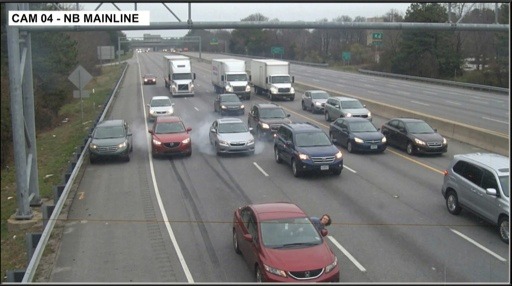
Virginia State Police reported that a charter bus failed to slow down for traffic near a work zone on Interstate 95, causing a chain-reaction crash that killed five people and injured dozens more. Reporting from the scene emphasized that the fatalities occurred in vehicles struck by the bus after it did not decelerate in time. The event unfolded in heavy traffic conditions typical of an active construction area, magnifying the consequences of delayed braking and situational awareness failures [1][5].
Emergency footage and local briefings showed large-scale rescue operations and significant damage along the corridor. Officials confirmed multiple hospitalizations and an ongoing reconstruction of events while they gathered physical evidence and driver records. Early accounts consistently described the bus as not slowing in the work zone before impact. That basic timeline now anchors the safety questions: why the driver missed the cues, whether training and communication standards were met, and how systemic checks allowed the situation to occur [3][6].
Language Proficiency And Licensing Scrutiny Intensify
U.S. Transportation Secretary Sean Duffy stated publicly that the driver “doesn’t speak English,” calling that unacceptable for anyone operating a passenger bus on American roads. He stressed that drivers must be able to read road signs and communicate with law enforcement, tying English proficiency directly to roadway safety and compliance interactions. His statement put a national spotlight on whether current licensing screens, carrier vetting, and state enforcement adequately verify language and training before drivers transport families and children [2].
Federal officials also began reviewing the driver’s license record and professional qualifications in the aftermath. Washington-area reporting confirmed that investigators were examining the operator’s New York licensing and training history for potential deficiencies, fraud, or oversight gaps. That review tracks with standard post-crash procedures but carries added urgency given the Transportation Secretary’s remarks about language ability. The findings will help determine whether failures occurred at the licensing agency, the carrier, or both [8].
Investigators Focus On Immediate Causes And System Failures
The National Transportation Safety Board launched a formal investigation to establish the crash’s proximate causes, including speed choice, work-zone signage, driver attentiveness, fatigue, and company compliance with federal and state rules. Investigators often differentiate between immediate driving errors and upstream qualification issues when analyzing catastrophic incidents. Here, the on-scene record shows the bus did not slow for traffic in the work zone, a critical fact that drives both mechanical and human-factor assessments [4][1].
While investigators develop a full timeline, the public debate has centered on whether a lack of English proficiency contributed to the driver missing critical warnings or communicating poorly during the trip. The Transportation Secretary’s comments framed language ability as a baseline safety requirement, not a cultural issue. That emphasis aligns with common-sense roadway realities: work zones use fast-changing instructions, detours, and alerts that demand rapid comprehension under pressure [2].
Policy Stakes: Enforce The Rules We Already Have
Conservative readers know bureaucracies often write rules but under-enforce them, and families pay the price. Federal regulations already require commercial drivers to understand English sufficiently to read signs and converse with officials. If the driver truly lacked English proficiency, that would suggest a breakdown in verification by licensing authorities or carrier hiring practices. Stronger audits, random compliance checks, and targeted penalties for carriers that skirt standards would reinforce safety without expanding government bureaucracy [2][8].
🚨5 Dead, 34 Injured in Virginia Bus Crash.
The identify of the bus driver has not yet been released. Law enforcement has stated that "Charges are Pending". pic.twitter.com/90zxcFS5L6
— American Truckers United (@atutruckers) May 29, 2026
Balancing fairness and safety means waiting for the National Transportation Safety Board’s final report while demanding rigorous enforcement now. The immediate facts support two truths: the bus failed to slow in a work zone, and top federal officials linked the driver’s language ability to unacceptable risk. The path forward is clear. Enforce existing English and training standards consistently, suspend carriers that bypass the rules, and ensure that every driver entrusted with American families can read the signs, follow orders, and act decisively under stress [1][2][4].
Sources:
[1] Web – Duffy Now Vowing Action After Non-English Speaking Driver’s Deadly VA …
[2] Web – 5 killed, dozens injured when bus plows into several vehicles near …
[3] Web – Sean Duffy calls Virginia bus crash driver’s lack of English …
[4] YouTube – Fire department spokesperson answers questions about bus crash …
[5] YouTube – Virginia bus crash: NTSB investigating, bus driver could face charges
[6] Web – Bus hits cars in Virginia, killing 5 people and injuring 34, state …
[8] Web – Sean Duffy calls Virginia bus crash driver’s lack of English …