The fastest way to ruin a star-studded concert is to surprise the talent with politics after they sign on—and that is exactly what set Freedom 250 on fire.
Story Snapshot
- Multiple artists withdrew hours after the Freedom 250 lineup dropped, citing newly learned political ties. [1][2][5]
- Organizers insist the event is a nonpartisan celebration of America’s 250th birthday. [1][2][3][4]
- Media coverage framed the shows as linked to Donald Trump, fueling a rapid reputational cascade. [1][2][3]
- The dispute turns on disclosure: who knew what, and when they knew it. [1][2][3]
What happened and why artists bolted
Announcers rolled out a nostalgia-heavy lineup for Freedom 250, then watched the roster unravel within a day as acts publicly withdrew. Reporting attributes the exits to performers learning of political ties after they agreed, with one formulation stating artists “were never told about any political involvement with the event.” That sequence—announcement, headlines about Trump association, swift withdrawals—tracks with typical booking blowups where branding clarity breaks down late. The speed of the exits suggests a disclosure gap large enough to override sunk costs. [1][2][5]
Artists and agents treat reputational risk like a second currency; once political branding surfaces, they reprice the gig instantly. The pattern here resembles a risk cascade: early exits signal danger, prompting more departures as managers see both principle and pragmatic optics at stake. This is not new. Music history is littered with corporate, government, and campaign-adjacent events that fell apart when sponsorship identity outpaced the original pitch. The accelerant is social media, but the fuel is information asymmetry at booking. [1][2]
Organizers say nonpartisan; coverage says Trump-linked
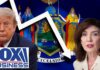
Organizers presented Freedom 250 as a government-supported commemoration of America’s semiquincentennial, a framing they argue should read as civic rather than partisan. Media accounts, however, repeatedly tied the concerts to Donald Trump, placing the shows within a political context audiences immediately recognize. That contradiction—nonpartisan claims versus partisan headlines—creates a credibility trap. Without document-level proof of what was disclosed to talent, the nonpartisan assertion strains against a louder, simpler narrative. [1][2][3]
Fairness requires acknowledging that public reporting has not surfaced the booking packets, offer letters, or artist-facing decks. Those materials would prove whether political association was explicitly flagged. Their absence does not convict the organizers, but it deprives them of the strongest rebuttal to the artists’ timeline. Common sense rooted in conservative values—say what you are, own your sponsors, keep promises—favors written clarity up front. If those documents exist and match the claim, produce them. If they do not, fix the process. [1][3]
Disclosure gaps cost money, trust, and time
Concerts run on logistics: deposits, travel holds, crew scheduling, and insurance windows. When acts withdraw after an announcement, vendors freeze, costs spike, and credibility evaporates. The fastest way to prevent that tailspin is ruthless transparency in the first email: who is paying, which political figures are attached, who will appear on stage, and what the press will say. Agents can live with controversy; they cannot live with surprises that make their clients look uninformed. That is the red line repeatedly crossed in blowups like this. [1][2]
Martina McBride Becomes 4th Performer 2 Withdraw From D.C. Concert Series as Backlash 2 Trump-Backed 'Freedom 250' Grows- “.. artists announced in concerts… hit with… backlash from fans believe show 2 be partisan, if not MAGA-leaning.” BRAVO 4 DECISION https://t.co/Vmo9ktyNql
— jsr72748 (@jsr72748) May 29, 2026
The practical fix is boring and bulletproof. Standardize a disclosure clause covering sponsors, government roles, and political affiliations; require written acknowledgment from artist management before offers convert; and time announcements to allow a cooling-off period where acts can exit cleanly. Then, if headlines frame the event as partisan, organizers can point to signed disclosures and keep the show intact. Absent that paper trail, withdrawals read as a referendum on honesty more than ideology—and the market punishes that quickly. [1][2][3][5]
Sources:
[1] Web – And Then There Were Three: Musical Acts Keep Bailing on Trump’s …
[2] Web – Some artists pull out of Freedom 250 American State Fair after …
[3] Web – Blame It on the Reign: Music Acts Exit State Fair – NOTUS
[4] Web – Some artists pull out of Freedom 250 American State Fair after …
[5] Web – Some artists pull out of Freedom 250 American State Fair after …