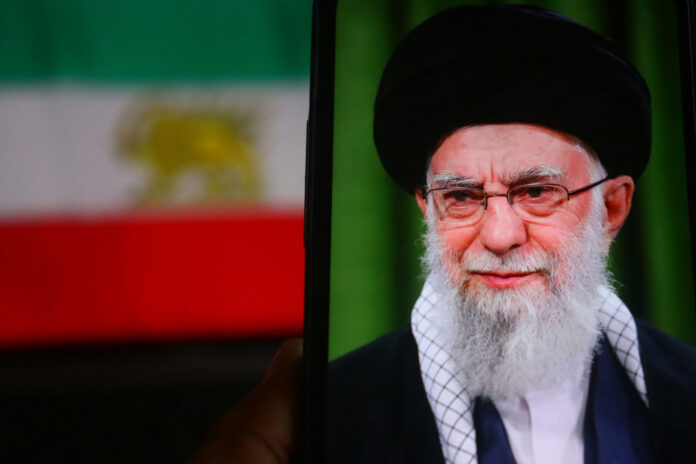
Iran’s delayed funeral for Ali Khamenei has turned into a test of state control, public fear, and public anger.
Quick Take
- Iranian authorities face complaints that workers, businesses, and charities are being pushed to attend funeral ceremonies.
- State-linked media and officials are projecting huge crowds, with some reports citing attendance estimates of up to 20 million.
- The funeral was delayed for months after Khamenei’s death in the war with Israel and the United States, which raised safety concerns.
- The record shows pressure to show unity, but it does not prove how many Iranians truly refused to attend.
Pressure to Fill the Streets
Messages collected by Iran International say Iranian authorities and state-linked institutions are pushing workers, businesses, and charities to join the funeral events. The same report says public-sector employees were ordered to attend official ceremonies, while one Tehran municipality worker said leave had been canceled and staff were told to show up. Another message said local officials warned charities and restaurant owners of disruption or closure if they did not cooperate.
That reporting matters because it points to a familiar pattern in Iran: the state wants visible loyalty, and it often uses jobs, permits, and local pressure to get it. The source does not give a total number of people who stayed away, and it does not provide named refusal records or independent attendance counts. So the strongest verified claim is coercion pressure, not a measured boycott.
Why the Funeral Became a Security Event
The funeral was delayed 131 days after Khamenei was killed in the opening hours of the war with Israel and the United States, according to the research package. NBC News reported that the ceremony was being held under unusual conditions, including a shaky peace deal with the United States and broad security concerns around a mass gathering. Those facts explain why officials treated the event like a political and security operation, not a normal burial.
That delay also helps explain the mixed public mood. One report says many Iranians mocked the long wait and questioned the burial plans, while others raised concerns about whether schools and public institutions were being used to boost turnout. The core issue is not just mourning. It is whether the government can still produce the image of national unity when many citizens already distrust official messaging and resent state pressure.
Official Unity Versus Public Doubt
State media and officials are projecting a massive turnout, with some claims reaching 20 million attendees. The government also set up a national committee to manage the ceremonies, and reports say public and private institutions were told to suspend operations so people could attend. More than 90 countries were said to be ready to take part, which gives the event diplomatic weight even if ordinary Iranians remain divided.
Iran’s highest-ranking political and religious leaders mourned the late Supreme Leader Ayatollah Ali Khamenei on Friday, during a state memorial ceremony in Tehran.
Not in attendance was his son, Iran’s new Supreme Leader, Mojtaba Khamenei, who is believed to have been seriously… pic.twitter.com/rbKWQkh6A0
— Mosheh Oinounou (@Mosheh) July 3, 2026
Still, the available reporting does not prove a broad public refusal. It shows a clash between two realities: a government trying to stage a show of unity, and citizens who are openly skeptical, tired, or angry. That gap is why the story matters beyond Iran. When a state has to lean on workplace orders, traffic controls, and national theater to fill a funeral, it signals weakness as much as power.
What the Story Shows About Iran Today
The funeral dispute fits a larger pattern in which Iran’s leaders use large public ceremonies to prove control, while independent reporting and citizen messages suggest fear and resistance underneath. The research also shows how hard it is to verify claims in real time. There is strong evidence of pressure and planning, but no hard count of non-attendees, no official refusal list, and no independent survey of attendance choices.
That leaves the public with a familiar problem. The government can announce unity, but it cannot easily prove it. The people can distrust the performance, but they still need real evidence to show how deep that distrust goes. In a country where state power, security fears, and public frustration overlap, even a funeral becomes a measure of how much control the rulers truly have.
Sources:
insiderpaper.com, iranintl.com, nbcnews.com, youtube.com, facebook.com