When a U.S. strike video circulates without public proof of drugs on board, Americans are left to choose between trusting officials or trusting their instincts about government overreach.
Story Snapshot
- U.S. forces struck an alleged drug-smuggling boat in the eastern Pacific under Operation Southern Spear, causing fatalities [1].
- Officials and media describe the targets as “alleged” traffickers; no cargo evidence has been publicly released [2].
- Reporting on an earlier September 2 incident alleges a controversial follow-up strike that killed survivors [6].
- The campaign’s framing and secrecy fuel bipartisan doubts about legal authority, rules of engagement, and transparency [1].
What Happened In The Eastern Pacific Strike
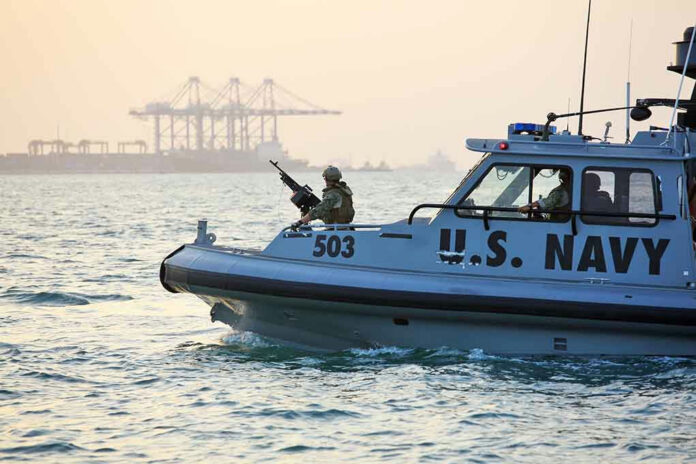
U.S. military forces struck a small vessel described by officials and coverage as an “alleged drug boat” operating in the eastern Pacific, part of a maritime counter-narcotics campaign known as Operation Southern Spear that began in 2025 [1]. Associated video reports and shorts promoted by major outlets reinforce the official framing but consistently use “alleged” to describe trafficking activity, reflecting that public-facing evidence of drugs on board has not been disclosed [2]. Officials reported fatalities from the latest action, confirming a lethal use of force [1].
The administration has linked the maritime strikes to a broader push to disrupt narcotics flows toward the United States, portraying the targets as narco-terrorists and emphasizing deterrence at sea [1]. Public materials, however, have not included verified manifests, lab tests, or imagery of seized cargo from this specific strike, leaving a gap between confident official language and evidence the public can independently evaluate [2]. That gap keeps scrutiny high among journalists, civil libertarians, and legal analysts tracking the campaign’s escalation [1].
The September 2 Controversy And Questions Over Rules
Coverage of a separate September 2 incident reported that after an initial strike on a suspected smuggling vessel, a follow-up strike killed survivors in the water or aboard debris, triggering legal and ethical questions about necessity and compliance with the law of armed conflict and maritime law [6]. The report attributes the account to sources and frames it as a developing controversy; the Pentagon has not publicly released a full, unredacted incident record to resolve disputed details [6]. The lack of transparency sustains bipartisan concerns about oversight.
Subsequent reports and briefings on other strikes in the campaign describe additional lethal outcomes at sea against suspected trafficking boats in both the Caribbean and the Pacific, continuing a pattern of short, edited videos and terse announcements without granular proof of contraband in each case [1]. While these summaries present the operations as successful interdictions against narcotics networks, the repeated reliance on “alleged” and “suspected” language, without accompanying forensic disclosures, has amplified skepticism that the evidentiary threshold for lethal force is being met publicly, even if officials assert classified intelligence exists [2].
Why This Matters Across The Political Spectrum
Americans across the aisle see a trade-off: stopping lethal drugs before they reach communities versus granting the government wide latitude to kill based on unshared intelligence. Supporters argue that fast-moving smuggling boats, cartel violence, and transnational crime demand decisive action and that revealing methods would compromise ongoing operations [1]. Critics counter that lethal strikes absent transparent proof erode rule-of-law principles, risk wrongful deaths, and expand executive power without sufficient congressional or judicial checks, especially when follow-up strikes on survivors are alleged [6].
US military posts video of deadly strike against suspected drug boat in the Pacific https://t.co/Zht1FYZItI
— WPMT FOX43 (@fox43) May 28, 2026
This debate lands in a period of deep distrust in Washington. Many conservatives worry that past leniency and porous borders fueled drug crises; many liberals fear militarized policy that normalizes killing suspects without trial. Both sides converge on one demand: verifiable accountability. Until the government releases case-specific evidence or independent oversight bodies can review unclassified summaries of target validation and post-strike assessments, each new video clip will intensify doubts that the system serves citizens rather than insulating elites from scrutiny [1].
Sources:
[1] YouTube – US military strikes another alleged drug boat in the eastern Pacific, …
[2] Web – United States strikes on alleged drug traffickers during Operation …
[6] YouTube – US military strike on alleged drug boat kills 2 in the Pacific Ocean